Building Health Equity From the Ground Up
When Fairview's Center for Community Health Equity launched its Accelerator Fellowship in 2026, the idea was simple but ambitious: take the same collaborative approach that has helped Fairview co-develop effective solutions for social determinants of health with community organizations, and extend it to individual leaders with their own ideas for change.
"We wanted to replicate that success by working with individual people who also have ideas and solutions," said the fellowship's leadership team, Kate Grannon and Diane Tran.
The result was a 12-month leadership development program built around four pillars: education and curriculum led by community organization leaders and internal experts, one-on-one coaching from Fairview staff, financial support (up to $10,000 in project funding plus a $3,000 stipend for each fellow), and intentional space for fellows to network and build relationships with each other and experts in the field.
Eight fellows made up the inaugural 2026 cohort. As their year comes to a close this December, Grannon and Tran reflected on what the fellowship revealed, what's ahead for year two, and what they hope to see in the next class of applicants.
A Community That Built Itself
Ask the team what stands out most from the first year, and the answer isn't a single project. It's the relationships.
"What stands out most is the commitment and passion from each of our fellows, and the incredible work they're doing in their communities," Grannon said. "Every time I hear them talk about the work they're doing, I'm so humbled."
Beyond the formal curriculum, fellows started showing up for each other. They attend one another's community events, lend their skills and services, and lean on a shared commitment to health equity that carried them through the year. That sense of community, the team said, was visible from day one and only grew stronger.
It also turned out there was far more appetite for this kind of support than Fairview anticipated. The first cohort drew ten times more applicants than there were spots available, a signal that many people doing this work have been looking for exactly this kind of connection.
"People can feel alone when they're trying to make change," Tran said. "The richness of the fellowship provides support and connection."
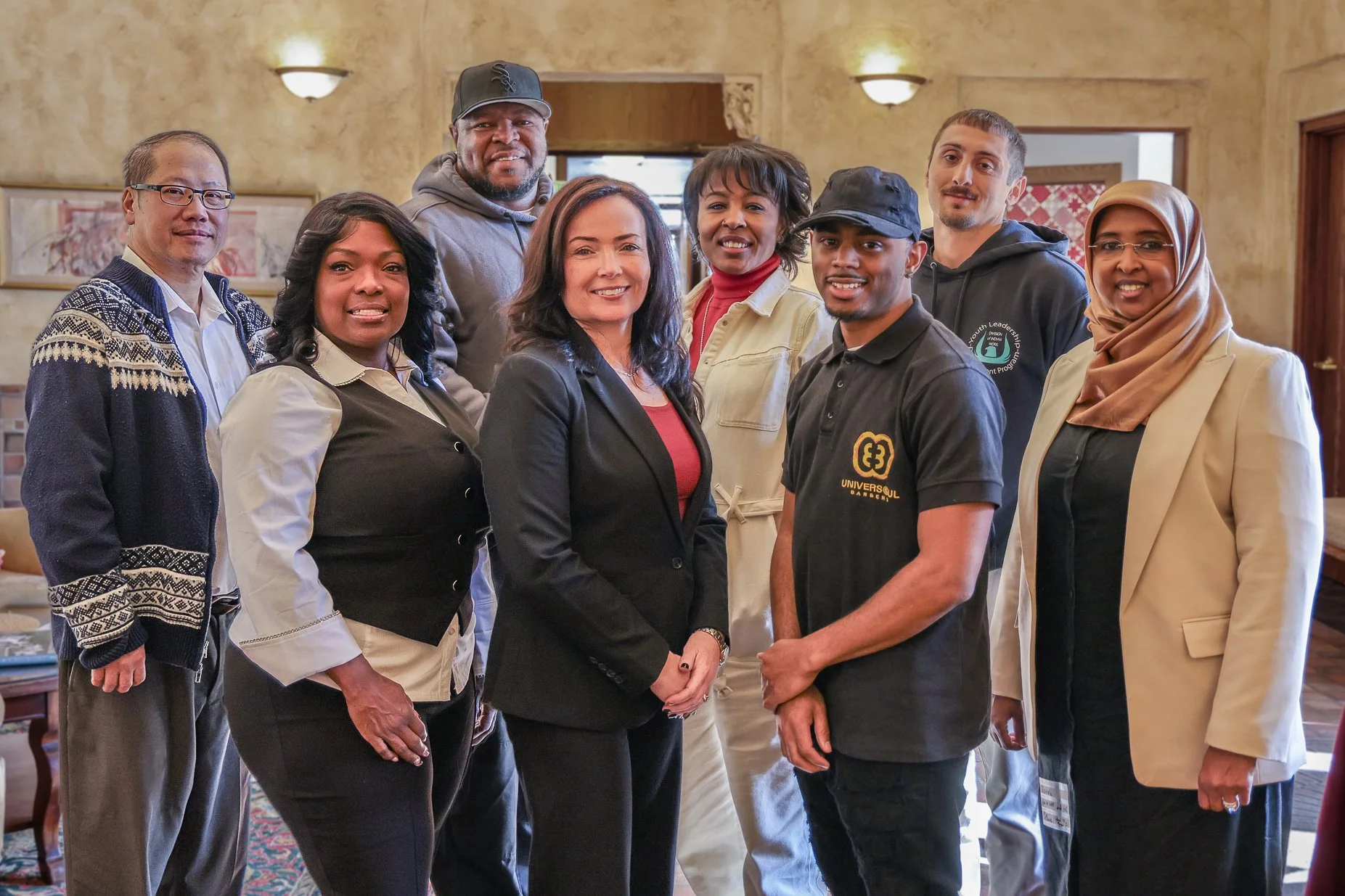
The 2026 Cohort of Fairview's Center for Community Health Equity Accelerator Fellowship
A Moment That Proved the Model
One story in particular captured why the program exists. A fellow who came into the year as an experienced, well-respected nonprofit leader told the Fairview team she kept waiting for the moment when she wouldn’t learn something new, but every session always delivered something valuable.
For someone already established in their field to say that spoke volumes, Grannon and Tran said. It showed that no matter where a leader is in their journey, there's still room to grow and be supported.
Fairview's scale made a difference in other ways, too. One fellow had spent months trying, without success, to get traction on state-level policy work. Because Fairview is a large organization with established relationships, the team was able to make connections, setting up a meeting that removed barriers to her as an individual, allowing her to move her work forward.
What the Funding Made Possible
The projects fellows built this year reflect the range of communities and issues represented in the cohort. One fellow used her project time to develop culturally specific nutrition training for the East African community, bringing it into adult day care centers and childcare programs where people are often getting a meal or more of their day. Another, working in rural northern Minnesota, piloted a program pairing physical exercise with peer connection for veterans, first responders, and EMS workers processing trauma. In North Branch, a fellow connected Hmong youth to farms to learn planting and harvesting while weaving in Hmong traditions. Others hosted community gatherings that doubled as wellness screening events for older adults, and developed a grief and trauma doula training program. Full details on each fellow's project are available on Fairview's website.
Looking Ahead to 2027
As applications open for the second cohort, the team said what excites them most is the sheer range of solutions people bring to the table, and the creativity applicants show in turning lived experience into action. That range made last year's selection process genuinely hard. Out of 80 applications, only eight fellows could be chosen, and Grannon and Tran expect this year's decisions to be just as difficult.
The team is also looking forward to building alumni programming for the first time, something they haven't fully shaped yet but see as a natural extension of the fellowship's focus on connection and network building.
How to Get Involved
Applications for the 2027 cohort are open now through October 1. Fairview is looking for community leaders with a health equity project in mind, whether fully formed or still taking shape, who want both funding and leadership development to bring it to life.
And even for those not applying, the team had a simple ask: help spread the word, connect with the Center for Community Health Equity, and check out the free trainings and resources already available to community leaders and members. Advocates for Better Health is proud to keep showing up for these fellows as this work grows into its second year.