When Change is the Name of the Game
The following blog post is guest written by Anna Irmiter, Director of Programs at Open Arms of Minnesota. Anna was a featured speaker at our most recent Night Out with ABH focusing on food access and justice.
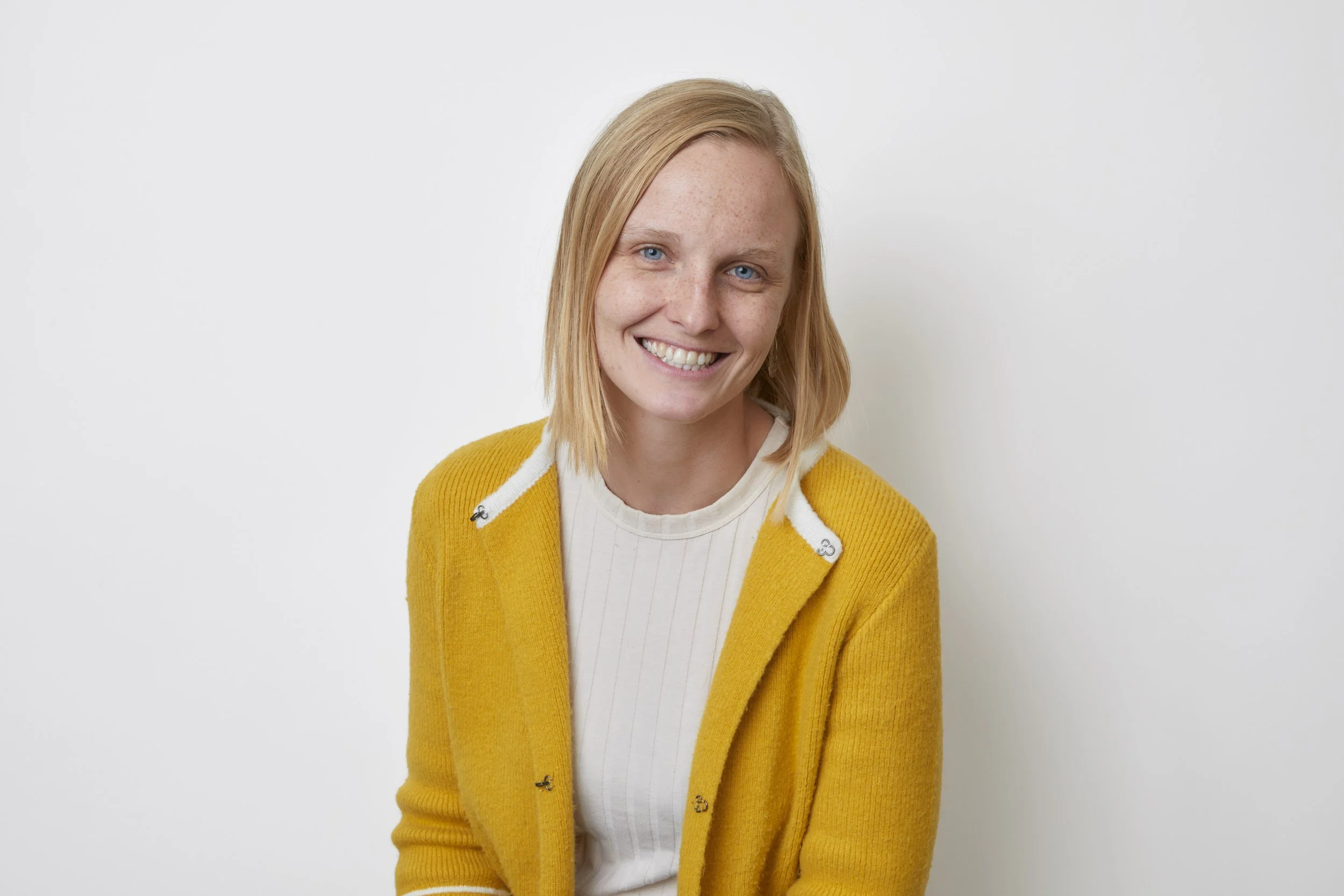
Anna Irmiter, Director of Program at Open Arms of Minnesota
For non-profits in Minnesota, the last few months have felt like a crash course in adaptability and collaboration, with ongoing funding reductions continuing to shrink the safety net for the communities we are all working to serve. It has forced continuous reevaluation of how we are addressing client needs, and more outreach to other organizations to think through how we can all work together to get through the coming years of unpredictability and rising needs of community members.
At Open Arms of Minnesota, we prepare and deliver medically tailored meals free-of-cost to Minnesota residents diagnosed with HIV/AIDS, cancer, MS, ALS, ESRD, CHF, and COPD. With eight different menus, our meals are designed to meet the specific dietary needs of our clients due to the health conditions they are living with. In addition to meals, we provide nutrition education and counseling to our clients and provide meals for caregivers and dependents in the home as well. Open Arms is one of a select group of organizations from across the country to earn accreditation from the Food Is Medicine Coalition (FIMC), meaning we adhere to national standards regarding the make-up and nutrition of our meals to ensure that we are truly providing food that is medicine for our clients, and that can be a stabilizing factor in their lives.
I have worked at Open Arms for five years and have been proud to see our organization adapt and change to meet the needs of our community over that time. We have run an emergency 4-week program in response to the COVID-19 pandemic to support people sheltering in place, piloted a medically-tailored grocery bag program for individuals experiencing high-risk pregnancies, and launched the Cultural Meals Program to develop new menus that are both medically-tailored and culturally familiar to better serve our diverse community of clients.
“This last year, however, has truly felt different in its demand that we all continuously do more with less. And as more nonprofit and social services are impacted, either shutting their doors, or reducing services out of necessity, our clients are turning to us for support more than ever. ”
Rather than discouraging our staff, this has led, once again, to innovative ideas to support our clients’ holistic needs. Our team of registered dietitians provide nutrition education and counseling alongside client meals, building lasting knowledge and skill sets around nutrition that clients can carry with them. We also have a passionate Client Services team, including an Advocacy Specialist that takes dedicated time to call our clients who express a need for additional services and get them connected to additional resources such as home chore help, rental assistance, or support groups for social connection. In the last year, two staff members started a “Food and Fun” social hour that clients can drop into and find community and connection, and a cross-departmental committee of team members worked to develop diagnosis specific resource guides to provide to all our clients when they start on services.
These wrap-around services are important, now more than ever, as most of our clients are struggling with more than medical challenges.
In our 2025 fiscal year, 49% of our clients were living under 200% of the Federal Poverty Level. In our 2025 Client Satisfaction Survey (sent annually), 52% of clients reported that if they didn’t receive meals from Open Arms, they would not have enough to eat.
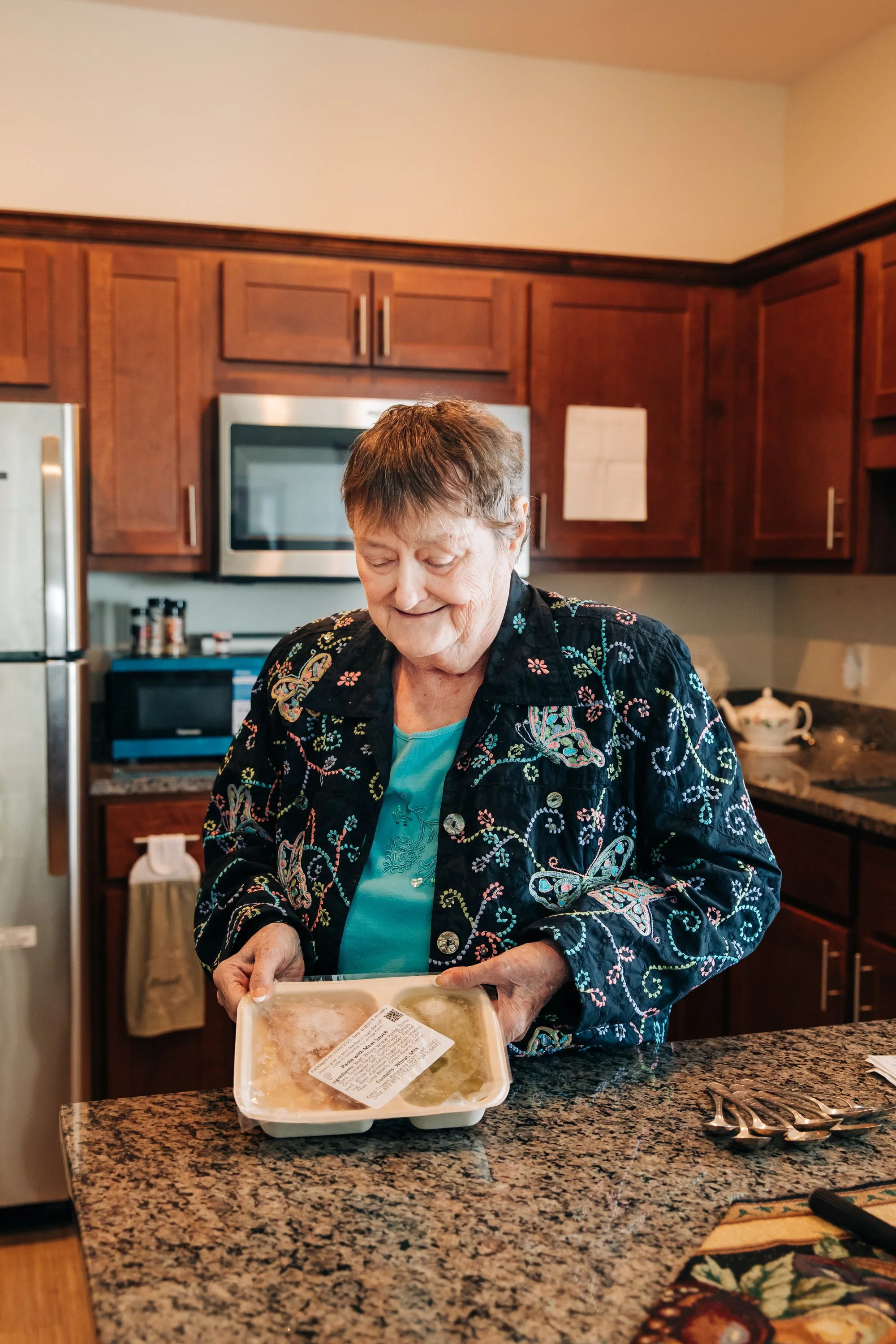
Open Arms of Minnesota client receiving a meal delivery.
This highlights the intersection of nutrition and the many social drivers of health impacting our community.
This is further illustrated in 92% of clients reporting that their stress has decreased since starting services, 98% of clients reporting that the meals have helped them continue to live at home and remain independent, and 90% of clients report that the meals help them stay out of the hospital and/or emergency room.
The innovation and flexibility of our team over my time here has crystalized for me that while providing medically tailored meals to our clients is critical in addressing their health needs, one of the most important things that we do at Open Arms is provide kindness and community to our clients. Open Arms itself started as a single act of kindness in 1986 – Bill Rowe, our founder, cooking food in his apartment and delivering it to a handful of neighbors living with AIDS who had become too sick to cook for themselves. Almost forty years later, we remain committed to nourishing our community, mind and body, through whatever comes next.