Why Helping People Quit Smoking Is Still a Critical Public Health Priority
For some, commercial tobacco use can feel like a public health issue of the past. Smoking rates have declined dramatically over the last few decades, and in the U.S., prevalence has dipped into the single digits for the first time. But according to Dana Carroll, the Director of the Tobacco Research Programs at the University of Minnesota Masonic Cancer Center, that perception is far from the truth.
“We’ve made incredible progress,” she says. “But many populations are still being left behind—and we’re not done yet.”
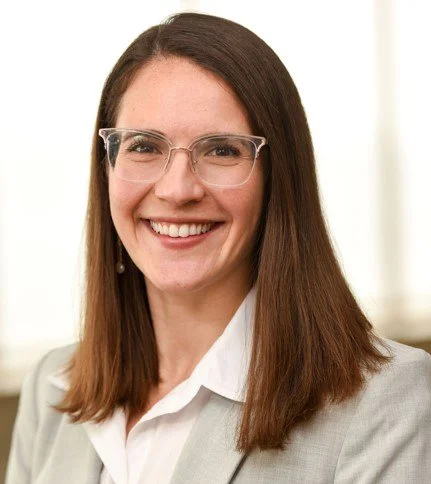
Dana Carroll, the Director of the Tobacco Research Programs at the University of Minnesota Masonic Cancer Center
A Career That Found Its Purpose
Carroll didn’t initially set out to work in this area of public health and specifically smoking cessation. Like many in public health, her path evolved organically.
“Tobacco work found me,” she explains. “I was studying chronic disease epidemiology and started working on research around COPD, which is predominantly caused by smoking. That opened my eyes to the scale of the issue and how much more attention it needed.”
Years later, she now directs the Tobacco Research Programs at the Masonic Cancer Center and works at the intersection of science, treatment, and policy—helping to shape the future of efforts to get people off cigarettes and other commercial tobacco products and to live healthier lives.
The Misconception: “Isn’t Smoking Already Solved?”
One of the most common questions Carroll hears is whether smoking is still a major issue.
The short answer: absolutely.
While national averages show progress, they often mask deep disparities. Carroll points to communities like rural areas, where tobacco use remains disproportionately high.
“In rural communities, it can feel like a cessation desert,” she says. “These are the economic backbone of our country, but they often lack access to the resources and support needed to quit.”
At the same time, the challenge itself remains uniquely complex.
“The cigarette is a deadly trifecta,” Carroll explains. “It’s addictive, full of carcinogens, and still legally sold. People who use tobacco are up against something incredibly difficult—and the tobacco industry continues to innovate at a rapid pace.”
Why One-Size-Fits-All Doesn’t Work
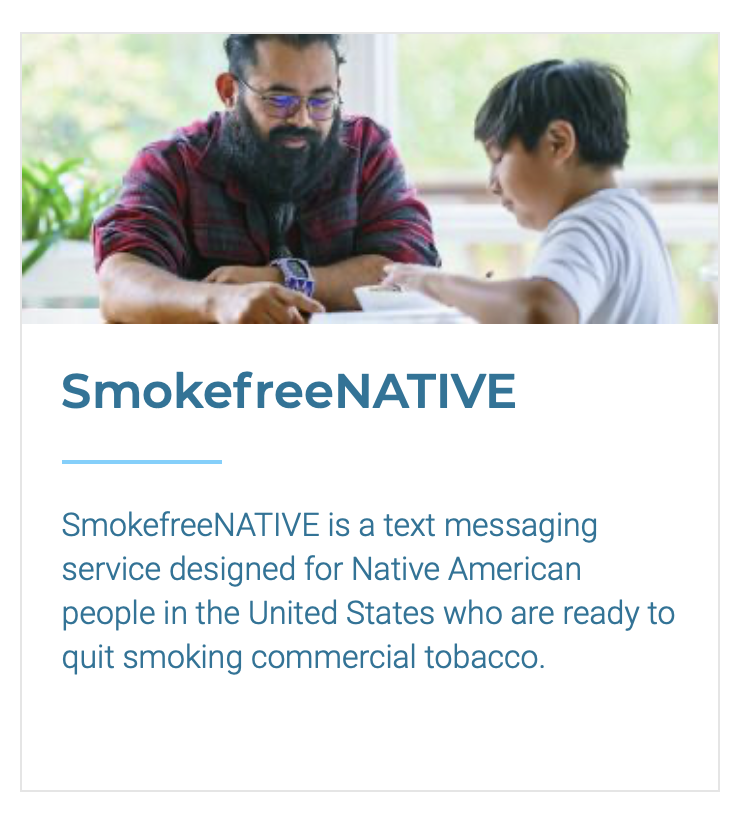
An example of a text-based quit program Carroll and her colleagues are currently working on evaluating.
A major gap in tobacco cessation efforts comes from how solutions have traditionally been designed.
“We’ve approached many public health issues from an urban, white-centric research lens,” Carroll says. “Then we’re somewhat surprised when those approaches don’t work for everyone.”
In reality, quitting tobacco isn’t just about behavior change or managing nicotine withdrawal—it’s deeply tied to culture, access, and lived experience.
For example, in many American Indian communities, tobacco holds sacred and ceremonial significance. That distinction fundamentally changes how cessation efforts must be framed.
“You can’t just say ‘all tobacco is bad’ and expect that message to resonate,” Carroll explains. “Programs need to be culturally grounded. In some communities, that means focusing on reclaiming traditional tobacco practices while eliminating commercial tobacco use.”
It also means addressing structural barriers—like transportation in rural areas—and expanding access through digital tools. Carroll and her colleagues are currently working on evaluating a text-based cessation program designed to meet people where they are.
The Power of Policy
While individual support is critical, Carroll emphasizes that policy is one of the most powerful tools we have.
“Policy change doesn’t just rely on individuals to change their behavior—it creates protection at a population level,” she says.
The policy Carroll is most passionate about has the potential to transform tobacco use entirely: setting a nicotine standard in cigarettes.
“There’s over a decade of research showing that if we reduce nicotine levels in all cigarettes by about 95%, cigarettes become minimally addictive,” she explains. “People smoke less, become less dependent, and are more likely to quit.”
Importantly, the goal isn’t to ban cigarettes overnight—but to leverage approaches that can hold up in court such as greatly reducing the primary driver of addiction in cigarettes.
“Nicotine is what keeps people using these products,” Carroll says. “If we can reduce nicotine to minimally addictive levels in cigarettes, the public health benefits would be enormous. We’re talking about an unprecedented number of lives saved.”
The Role of Advocacy
For organizations like Advocates for Better Health, Carroll sees a critical role to play.
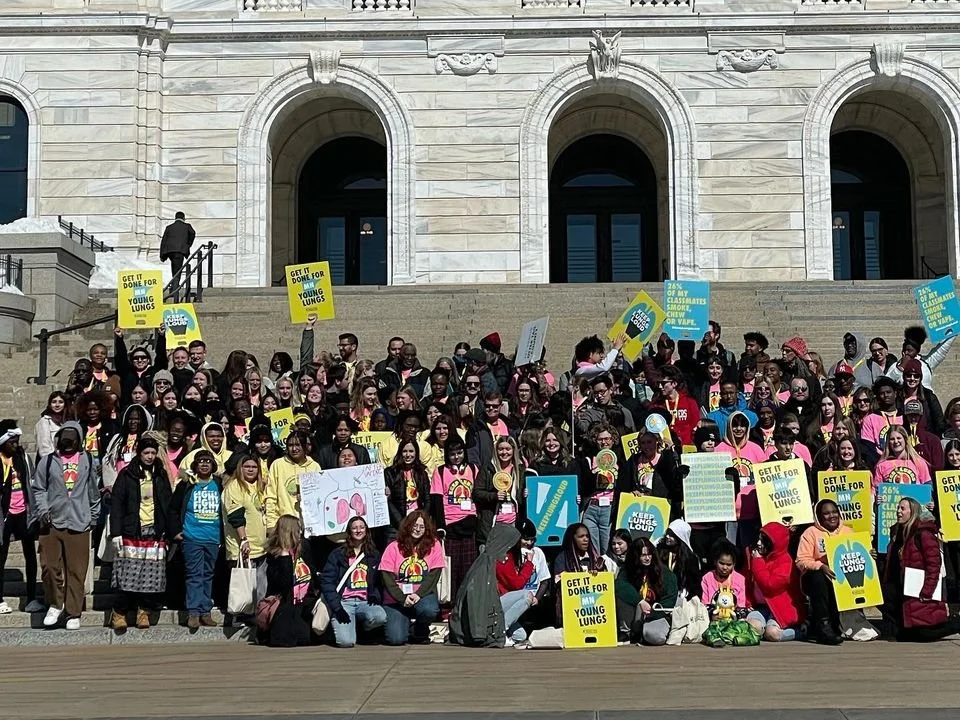
Tobacco prevention advocates at the Minnesota State Capitol in 2023.
“Advocacy is essential,” she says. “We need organizations that can translate the science, elevate these issues, and help policymakers understand why these efforts matter.”
In a field that spans research, treatment, and policy, no single group can do everything.
“We all wear different hats,” Carroll explains. “Some focus on science, others on treatment—but advocacy is what connects it all. It’s how we turn evidence into action.”
And in a landscape where new tobacco products continue to emerge, keeping cessation efforts visible is key.
“How do we keep tobacco cessation ‘top of mind’?” she asks. “That’s the challenge—and the opportunity.”
Tobacco cessation may not always dominate headlines, but its impact remains profound. With the right combination of culturally grounded approaches, innovative tools, and bold policy action, we are closer than ever to ending one of the leading causes of preventable death.
As Carroll puts it: “We have the tools. We just need to use them.”